
5th Floor, Room 515
2500 W North Ave
Baltimore, MD 21216
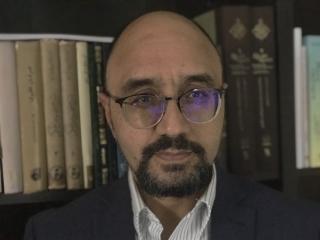
Sayed Hassan “Akhlaq” Hussaini is a Professor of Philosophy at Coppin State University. He previously taught Religion and Islamic Philosophy at George Washington University (2022–2025); Philosophy, Bioethics, Business Ethics, and Cyberethics at Marymount University (2021–2025); and Bioethics at Notre Dame of Maryland University (2018). He has also worked with the McLean Center for the Study of Culture and Values at the Catholic University of America (2012–2017); the University Center for Human Values at Princeton University (2017); and Boston University (2017–2018).
Earlier in his career, Dr. Hussaini served as the Dean of Gharjistan University, Farah branch (Afghanistan) in 2011. He also acted as an academic advisor to the Afghanistan Academy of Sciences in 2010 and taught graduate and undergraduate courses at several Iranian universities, including Payam-e Noor University (2008–2010). Professor Akhlaq has taught a wide range of courses, including Research Methods, History of Islamic Philosophy, History of Western Philosophy, Metaphysics, Logic, Peripatetic Philosophy, Transcendental Philosophy, Sufism, and Comparative Religion.
Dr. Hussaini’s areas of expertise include comparative philosophy, modern philosophy, the Enlightenment and modernization, and dialogue among civilizations. His current research focuses on post‑colonialism, liberation theology, and applied philosophy.
Books
- Exiled Scholars in Western Academia: Refugees or Intellectuals? Reflections on the Paradox of Inclusion and Exclusion Co-edited with Alfred Babo, (Palgrave Macmillan, 2025)
- The Making of Shia Ayatollahs (Lanham: Rowman & Littlefield, 2023)
- Intellectual and Spiritual Debates in Islam (Cluj University Press, 2023)
- The Etiquette Guidelines of Critical Thinking “Adab-e DurustAndishi”, (Kabul: Maqsodi publisher and Roya Institute for Global Justice, 2023)
- From the Balkh Tavern to the Weimar Firetemple, (Mazar-e Sharif: Khane Mawlana, 2021)
- A Collection of Philosophical Meditations: Allameh Abdullah Samandar Ghuryani, Sayed Hassan Akhlaq (Ed.), (Kabul: Amiri, 2019)
- The Sacred and the Secular: Complementary and/or Conflictual? Co-edited with John P. Hogan, (Washington D.C.: CRVP, 2017)
- From the Tradition of Balkh to the Modernity of Paris (Kabul: Nebras Organization and Saied Publication House, 2010)
- The Enlightenment Tradition in Islam and the West (Tehran: Amir Kabir, 2009)
- Philosophical Discourse between Islam and the West (Qum; Al-Mustafa International University, Iran, 2008)
- From Mawlana (Rumi) to Nietzsche (Qum, Soluke-e Javan, Iran, 2007)
Selected Articles
- “Between Veil and Vanguard: Ideological Battles over Afghan Femininity,” in Review of Middle East Studies (Cambridge: Cambridge University Press, 2026) Vol. 59, Iss. 2, pp. 55-57.
- “Muslim Communists: Afghan Atheism in the 20th Century,” in Eva Guigo-Patzelt, ed., Communist Perspectives on Atheism in the Twentieth Century (London: Routledge, 2025), pp. 125-140.
- “Afghanistan Nation-Building and Missed Critical Element of Unifying Ideology,” in Journal of South Asian and Middle Eastern Studies (Villanova University, Spring 2022) Vol. 45, No. 3, pp. 51-78.
- “Introducing a Comparative Echotheology: Islamic Concept of Basmalah and Luther’s Commentary of the Ten Commandments,” in Mary Philip, Chan Rimmer and Tom S. Tomren, ed., Religion, Sustainability and Education: Pedagogy, Perspectives, and Praxis towards ecological sustainability (Norway, Steinkjer: Embla Akademisk, 2021), pp. 141-168.
- “Being a Muslim in Global Times: Taqlid, Jihad and Hijra in the Quranic Hermeneutic,” in Denys Kiryukhin, ed., Community and Tradition in Global Times (Washington, D.C.: CRVP, 2021), pp. 139-156.
- “When Sufism Meets Politics (the Pluses and Minuses of Nasafi’s Perspective,” in Journal of South Asian and Middle Eastern Studies (Villanova University, Summer 2020) Vol. 43, No. 4, pp. 74-89.
- “How Muslims and Christians Can Practice Wilayat (Support) toward Each Other? A Response to Nostra Aetate” in Journal of South Asian and Middle Eastern Studies, (Villanova University; Fall 2018) Vol. 42, No.1, pp. 28-48.
- “The Source of the Problem: Both Islam and the West Have Forgotten Their Roots (A Philosophical Study of the Charlie Hebdo Shooting),” in Journal of South Asian and Middle Eastern Studies, (Villanova University, Spring 2017) Vol. 40, No.3, pp. 75-85.
- “Islamic Philosophy between Theism and Deism,” in Revista Portuguesa de Filosofia, (Axioma – Publicaoes da Faculdade de Filosofia, 2016) Vol. 72, No. 1, pp. 65-84.
- “The Shared Concerns of Nietzsche and Rumi on Humanity” in PUDN Journal of Philosophy, (Russia: Moscow, Publishing House of the PFUR, 2016) No. 3, pp.104-112.
- “Rationality in Islamic Peripatetic and Enlightenment Philosophies,” in George F. McLean, ed, Philosophy Emerging from Culture, (Washington, D.C.: CRVP, 2013), pp. 71-86.
- “The Theoretical Foundations of Tolerance in Rumi,” in Philosophy, Culture, and Traditions (A Journal of the World Union of Catholic Philosophical Societies, 2012), Vol. 8, pp. 165-188.
- Ph.D., Philosophy, Allameh Tabataba'i University (ATU), 2009
- M.A., Philosophy, Imam Khomeini International University (IKIU), 2004
- B.A., Major: Philosophy and Islamic Theology; Minor: Islamic Jurisprudence and Fundamentals of Islamic law, Razavi University of Islamic Sciences, 2002
Professional Memberships
- American Society of Islamic Philosophy and Theology (2019- Present)
- American Association of University Professors (2019-Present)
- American Council for the Study of Islamic Societies (2016- Present)
- American Academy of Religion (2013- Present)
- Association for Political Theory (2018-Present)
Comparative Philosophy, Existentialism, Pragmatism, Islamic Philosophy, Sufism, Comparative Religion, Dialogue Among Civilizations, Ecotheology, Bioethics
The profiles listed are created by individual faculty. Coppin State University (“CSU”) makes absolutely no guarantee as to the currency, accuracy, or quality of information published. The views and opinions expressed on these pages or any links made available are strictly those of the faculty author and do not necessarily state or reflect those of CSU. The contents of these pages have not been reviewed or approved by Coppin State University.